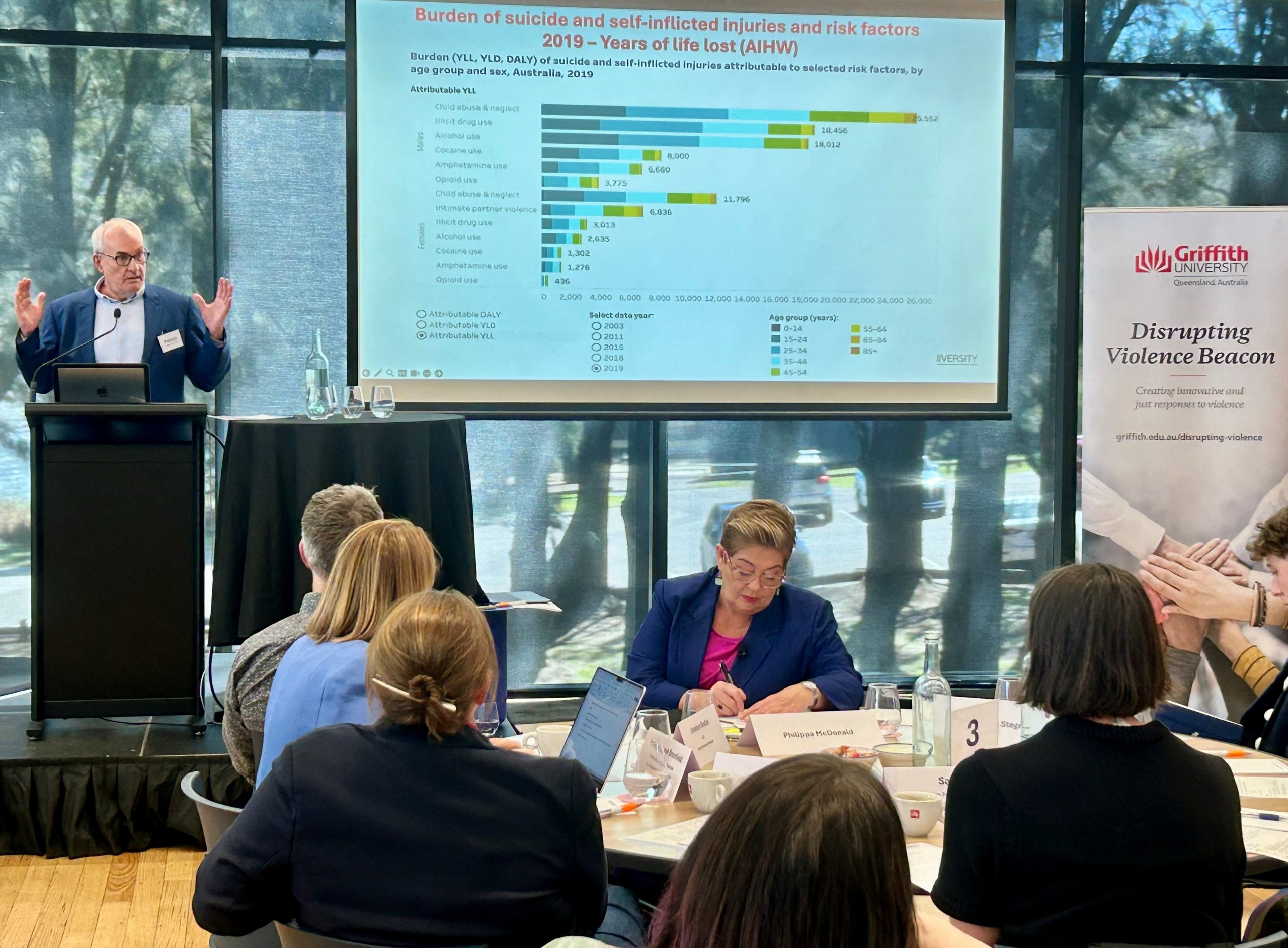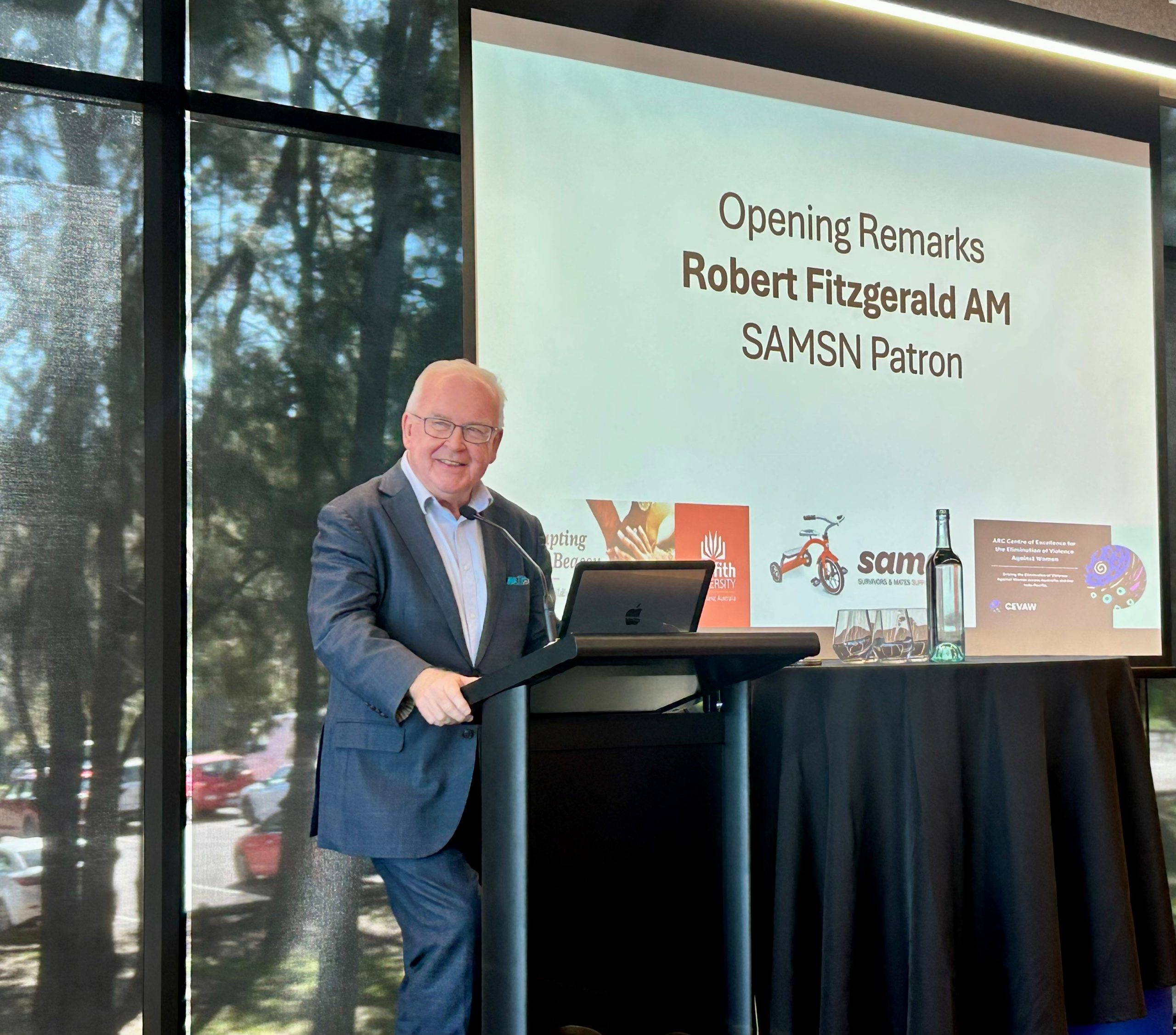
Roundtable: Intersections of Child Sexual Abuse, Suicidality & Violence
The Roundtable – Intersections of Child Sexual Abuse, Suicidality & Violence – was held at the Red Shed in Canberra on the 17th of September 2025 as part of a joint project between Survivors & Mates Support Network (SAMSN), Griffith University’s Disrupting Violence Beacon (DVB) and the ARC Centre of Excellence for the Elimination of Violence Against Women (CEVAW). It aimed to shine a light on the ongoing national tragedy of child sexual abuse (CSA), suicidality and violence. Participants included survivors and advocates, academics, researchers, policy makers, and frontline workers in service delivery. It is hoped this Roundtable, and further conversations will help shape priorities and collaborations around the critical work needed to save lives touched by CSA.
The Roundtable is part of the first stage of the larger research and action project – Intersections of Male Survivors of Child Sexual Abuse with Suicidality and Violence: Research & Action Project. The initial stages of the project have been funded by SAMSN, with the support of DVB, and CEVAW. Further funding is required to complete all stages of this project.
The focus of the project is on developing a clearer understanding of suicidality and the intersecting needs of male survivors of CSA who are disproportionately represented among completed suicide victims. These intersecting needs are associated with trauma, social isolation, domestic and family violence, and alcohol and other drug use (AOD). The intersectional nature of this issue is central to the research project and to understanding ways to alleviate trauma and suicidality and the risk factors for gender-based violence.
The project will review current knowledge, study the experiences of male survivors of CSA who use SAMSN and similar services, and consult with men who have lived experience, using their insights to organise a summit focused on strategies to prevent suicide and address the impacts of trauma and violence in Australia.
Acknowledgements & Thanks
We wish to thank all participants who took part in the Roundtable as well as the
organisations and institutions across multiple government jurisdictions, non-government
and social service sectors, survivor and advocate communities, peak body
representatives, and researchers who supported peoples’ attendance. We acknowledge
the broader community support for this important project.